Both demat and trading accounts are essential for making investments in stocks and other securities like mutual funds and ETFs. These accounts have different purposes and roles in managing individuals’ securities. The basic difference between these two accounts is that a demat account holds an investor’s securities, whereas a trading account is responsible for buying and selling securities for an individual.
However, individuals who are new to investments often get confused about the role of a demat account and trading account. This blog highlights the key differences between demat vs trading accounts. You will also learn the overall procedure for opening both accounts.
Understanding the Demat Account
A dematerialisation or demat account is an account that holds your securities like stocks, mutual funds, or bonds in electronic format. Just like your bank account keeps your currency, a demat account also stores your securities. The Demat account eliminates the need for physical certificates because it holds financial securities in digital format.
You will receive a demat A/C number after opening a new account, which will help you deal with your securities. You can withdraw funds from your demat account just like you can from your bank account. The Demat account helps investors invest, streamline, and transfer ownership of the securities in the stock market.
Understanding the Trading Account
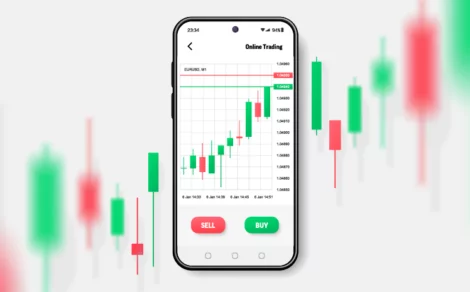
A trading account allows you to trade securities in the stock exchange. Individuals can buy or sell shares, mutual funds, and other securities according to their needs with the help of this trading account. When an organisation lists its shares in the market, you can buy them with this account by buying them from the issuer or another investor. This trading account acts as a platform to place buy or sell orders on the stock exchange.
Individuals can also sell a particular portion of shares with this trading account. Registering with a stockbroker can allow you to get a trading account. With this account, you are assigned a unique trading ID, which grants you access to conduct trading transactions. You can create a trading account after creating a new demat account or link an existing demat account.
Key Differences Between Demat and Trading Account
The terms demat account and trading account are commonly used while investing in the stock market. However, these two accounts have similar functions and roles when it comes to stock market investment. The table below highlights the key differences between demat and trading accounts in different aspects:
| Aspects | Demat Account | Trading Account |
|---|---|---|
| Meaning | A Demat account holds securities that investors buy from the stock exchange to address theft, losses, and other issues. | A trading account helps investors to place buy and sell orders from their demat account. |
| Function | It allows you to receive the allotment of shares after a purchase. It does not allow investors to make transactions on the stock exchange, but it allows them to store a variety of financial products. These include stocks, mutual funds, ETFs, bonds, and other things. | It is linked to your bank account, so you can add money from your bank account to this account. Additionally, you can also make transactions of shares and all other types of securities from the stock market. |
| Nature | A Demat account works similarly to an individual’s bank savings account to store financial securities in dematerialised form. | A trading account acts as a platform that enables investors to buy and sell securities. The role of a trading account is to execute trades in less time. |
| Objective | The main objective of a demat account is to ensure the safety of investors’ securities. It lets investors store their shares in digital format rather than physically. It also tracks the demat holder’s stocks or shares. | The main aim of a trading account is to make the process easier for investors to buy and sell securities of their choice. They can access the stock market with the help of this account. |
| Operating module | This demat account generates a flow statement, which allows an investor’s trading transactions to be measured over time. Being an ownership of securities, this account is measured on 31st March of every year. | The trading account also provides a flow statement that keeps and evaluates investors’ trading transactions. As a trading account keeps transactions throughout a specific duration, it is measured over any time period, like one month, three months, or even one year. |
| Unique Identifier | A 16-digit demat number will be there to identify a demat account holder. | A trading account has a distinct trading number that allows individuals to buy and sell shares in the market. |
| Issuing entity | A depository participant, an intermediary between investors and depositories, issues a Demat account to investors. | A stockbroker registered under the Securities Exchanges Board of India (SEBI) provides a trading account to an investor. |
| Linked Account | A Demat account is linked to users’ bank accounts. | Trading accounts are linked with the demat accounts to convert the securities. |
Procedure to Open a Demat and Trading Account in India
Since you have gone through the key differences between demat vs trading accounts, it is also important for you to know the process of opening a demat and trading account. Below are the steps that you can follow to open a trading account and demat account in India, both offline and online.
Offline Process of Opening Demat and Trading Account
This traditional method of opening a demat account was followed before SEBI permitted online KYC authentication. You had to call the broker’s representative to connect you. You can still follow the below steps to open a demat account offline:
Step 1: Go to the broker’s nearest office. Then, fill out the demat application form and submit your identity and address proof. It is mandatory to carry the original documents for spot verification.
Step 2: Execute the client agreement process with your broker to outline your responsibilities as a trader.
Step 3: After correctly verifying your documents, the broker allocates you the Beneficial Owner Identification Number (BO ID) and the Unique Client Code (UCC).
Online Process of Opening Demat and Trading Account
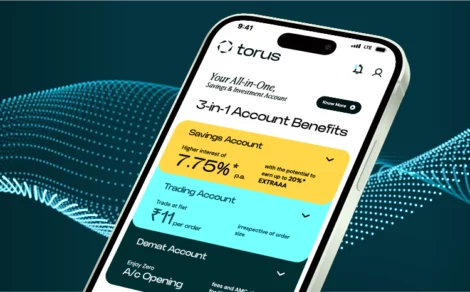
You can use any online brokerage platform to open your demat account. Torus Digital offers numerous benefits if you open a trading and demat account with the platform. Follow the steps below to open a demat account online in India using the Torus Digital platform:
Step 1: First of all, you must register your mobile number and email ID, as well as accept the Terms and conditions before you log in.
Step 2: Select annual income, marital status, and other income sources. Then, confirm that you are an Indian citizen before proceeding.
Step 3: Verify your Aadhaar and PAN by allowing access to Torus Digital to gather documents from Digilocker. You have to give consent to the platform to access your PAN and Aadhaar details through an OTP verification process using your Aadhaar-linked mobile number.
Step 4: You need to provide your bank details by choosing the bank account which you prefer as well as UPI to link to the Torus Digital account.
Step 5: Now upload your picture with a selfie by ensuring you are not wearing spectacles. In addition, you may draw your signature on a clean sheet and upload a photo of it.
Step 6: Choose an investment segment and mention your nominee details. You can provide the details of a maximum of three nominees. Make sure you provide guardian details in case the nominee is minor.
Step 7: Complete your demat and trading account opening process by providing an e-sign using your Aadhaar on the NSDL website. Torus Digital will activate your account within 24 – 48 working hours after the completion of the process.
Charges Included in Demat and Trading Account
The difference between trading accounts vs demat accounts becomes relevant while investing in the stock market. Investors also need to know about the charges included in demat and trading accounts. Here are the charges you have to take into account while opening a demat and trading account:
- Demat and Trading Account Opening Charges: Every broker charges a specific amount to open a demat and trading account. These charges vary from broker to broker. However, you do not have to pay any charges if you open an account with Torus Digital. You can open your demat and trading account in just six minutes using this platform.
- Brokerage Charges: Brokers in India levy the brokerage charges on investors for each buy and sell transaction. While investing with Toruis Digital, you can access transparent pricing with no hidden charges. Torus Digital levies only ₹11 on depository participant charges and ₹21 for pledge charges, which are very minimal compared to other brokers in India.
- Annual Maintenance Charges: The annual maintenance charges (AMC) are levied to maintain your demat account. Although each broker levies a particular AMC, Torus Digital does not charge any amount for AMC.
- Dematerialisation and Rematerialisation Charges: Investors have to pay these charges to convert their physical securities into electronic form. You have to pay only ₹30 and an extra ₹5 for a certificate to make a dematerialisation request on the Torus Digital platform. For rematerialisation requests, Torus Digital charges a nominal fee of ₹40 for 100 securities or a flat fee of ₹25 for each certificate, whichever is higher, in addition to registered post charges, which are subject to a minimum ₹25.
Final Thoughts
To make investments in the stock market, understanding trading account and demat account differences is crucial. A Demat account manages the securities that you have bought from the stock exchange to address theft and other issues. On the other hand, a trading account helps investors trade securities from their demat account.
Each brokerage charges a specific amount to open a demat account. However, you can open a demat account with Torus Digital for free. Log on to the Torus Digital platform to start your investment journey!