In Indian financial markets, investors use demat accounts to store newly bought shares and other financial securities. A Demat account also assists in keeping a record of every transaction made by individuals, such as the purchase and sale of stocks, mutual funds, and bonds. These demat accounts include a unique identifier for each account holder. This unique identifier is called the Beneficiary Owner Identification (BO ID) Number.
A BO ID assists investors in accurately tracking assets, making efficient transactions, and managing securities securely to enhance long-term investments. The BO ID is a unique alphanumeric code registered with Central Depository Services Limited (CDSL). Read this blog to learn every detail related to BO ID, including its benefits and limitations.
Definition at a Glance: BO ID
| Term | BO ID (Beneficial Owner Identification Number) |
| Meaning | A unique identifier assigned to an investor’s demat account by the depository (such as CDSL or NSDL) in India |
| Format | For CDSL: 16-digit numeric BO ID. For NSDL: 16-character BO ID that typically starts with “IN” followed by 14 digits |
| Purpose | Uniquely tracks holdings, transactions, and corporate actions linked to an investor’s demat account |
What is a Depository Participant (DP)?
A Depository Participant (DP) acts as an intermediary between the investor and the depository, such as CDSL or NSDL. It is a SEBI-registered entity—typically a bank, broker, or financial institution—that offers demat services to investors. When you open a demat account, it is done through a DP who handles all your transactions, including the purchase, sale, and transfer of securities. While the depository holds the securities in electronic form, the DP provides the platform and services needed to access and manage them.
How is a Demat A/C different from a Depository Participant (DP) Identification (ID)?
A Demat Account is an account where an investor holds their financial securities electronically, eliminating the need for physical share certificates. It helps manage shares, bonds, mutual funds, and other securities easily and securely.
On the other hand, a Depository Participant Identification (DP ID) is part of the 16-digit BO ID and identifies the intermediary (DP) with whom the investor has opened their demat account. The first 8 digits of the BO ID represent the DP ID, which shows which broker or bank is hosting your demat account, while the last 8 digits are unique to your account.
In essence:
- The Demat Account is your personal account for holding and transacting in securities.
- The DP ID identifies the firm or broker providing you access to the depository system.
Understanding this distinction is important to prevent confusion when tracking or managing investments across different platforms or brokers.
Understanding the BO ID
Understanding what is BO ID is essential for every investor who opens a demat account. All demat accounts opened by the Central Depository Services India (CDSL), an Indian depository, are associated with a BO ID. This unique identifier is a 16-digit number, the first eight digits of which indicate the Depository Participant (DP) ID. The last eight digits of the BO ID are unique to every investor.
The DP ID in the number helps to identify the broker whose account you are using, while the last unique ID distinguishes your account from others within the same depository. For instance, if your DP ID is 12356500 and your unique client ID is 02230921, your Beneficiary Owner ID will be 1235650002230921.
Your 16-digit CDSL-registered BO ID number allows you to trade securities in the stock market. This code varies for each financial broker. A Demat account holder must keep the BOI ID secured and not reveal it to others. This can prevent any unauthorised access to his or her Demat account.
How Does BO ID Work?
To understand what BO ID is in the share market in practical terms, it helps to see how it works in day-to-day investing.
Whenever you open a demat account and start buying or selling securities, your BO ID is used in the background to record and track everything correctly in the depository system.
Step-by-step example of how BO ID works
| Step | Action | Role of BO ID |
| Step 1 | Open a demat account with a SEBI-registered Depository Participant (DP) | A unique BO ID is generated and linked to your demat account in CDSL or NSDL |
| Step 2 | Buy shares or other securities | The securities are credited to the demat account identified by your BO ID |
| Step 3 | Corporate action, such as a dividend, a bonus or a rights issue, happens | Benefits are credited to the exact holdings mapped to your BO ID |
| Step 4 | Sell shares or transfer holdings to another demat account | The movement of securities is recorded and tracked using your BO ID |
Through this process, the BO ID ensures that every credit, debit, or corporate benefit is accurately mapped to the correct investor.
Where Can You Find Your BO ID?
Since you understand what is BO ID in CDSL, let us know where you can find your BO ID. Finding your BO ID is essential to accurately record demat account transactions and make proper attribution to the actual investor. Here are the five different ways you can find your BO ID:
- Demat Account Statement: You receive a demat account statement from a DP that includes essential information on your trades and investments. After getting this statement via mail, you can find the BO ID in the account summary section. This section is beside your account number on the first page.
- Mobile applications of DPs: DPs in the market offer mobile apps that give you access to your demat account. You can download your respective DP mobile app from relevant application stores. You can install the official application of your DP from the Google Play Store or App Store.
Tap your name or the client ID after downloading the application. You can see your BO ID number after scrolling down.
- Accessing the Website: You can log on to the official CDSL website based on where your DP is registered. Navigate to the account summary page after signing up for the depository website. There, you can find your BO ID.
Accessing your DP’s online portal and logging in with your appropriate credentials can also help you in this case. You will find your BO ID in the profile section of that exchange.
- Customer Service: You can contact your DP’s customer service if you find the above-mentioned process difficult. You need to provide identification details like name, PAN card number, and registered email ID to your DP’s customer service via mail or a call. A customer service representative will assist you in finding your BO ID.
- Documents for Account Opening: The documents for account opening also help you to find the BO ID. Find the documents you were provided when you first opened your demat account and search for the BO ID listed in one of them.
Moreover, you can find your BO ID with the help of your DP’s welcome kit if you have been provided with it. Read the welcome letter or the account opening kit. You will find the ID in the account details section. You may also have this welcome kit in the form of an email.
However, if you have not registered with a DP, then follow these simple steps to get a new BO ID:
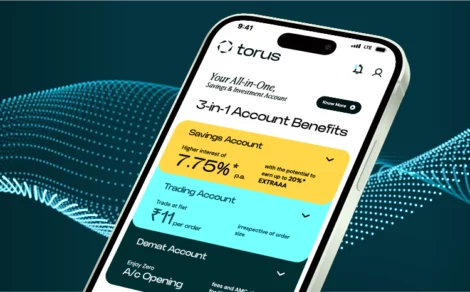
- Step 1: Choose a brokerage which offers demat account services. You can open a demat account with Torus Digital, which includes no account opening charges and maintenance charges.
- Step 2: Complete your KYC verification process by providing identification documents, address proof, and a new photograph. These are mandatory for opening a Demat Account with any broker.
- Step 3: Verify your Aadhaar and PAN with Torus Digital by sharing the access of Digilocker. You have to give consent to the platform to access your PAN and Aadhaar details by verifying the OTP with your Aadhaar-linked mobile number.
- Step 4: Share your bank details with Torus Digital by selecting your bank and preferred UPI to link with the Torus Digital account.
- Step 5: After verifying and opening your account, you will be issued a BO ID from your DP for making transactions.
Benefits of BO ID
BO ID in CDSL is a unique code that helps to identify the Demat account holder. Here are some benefits of BO ID that you can avail after opening a demat account:
- The BO ID helps to identify each demat account. This makes sure that all the transactions are attributed to the account holder correctly.
- You can seamlessly execute transactions like buying, selling, and transferring securities using your BO ID. This unique code also helps streamline processes within the depository.
- This unique identifier also reduces the risk of errors and theft. A BO ID allows the legitimate account holder to execute transactions. Since it tracks all the activities, it becomes easier to detect and handle discrepancies.
- This ID maintains accuracy while attributing the account statements to the correct account. This ensures investors have precise records of their transactions.
- The BO ID enables the precise distribution of benefits from corporate actions like dividends, bonus issues, and rights issues to the rightful account holders. The BO ID ensures that investors avail such benefits in their demat account.
Limitations of BO ID
Understanding the limitations of BO ID is also important. Besides understanding what is BO ID in the share market, an investor should also go through the limitations of this ID system. Below are some of the drawbacks of a BO ID:
- A BO ID is linked with the account holder’s transactions. This could result in complications if there are any errors in the initial account setup.
- Any outdated and fake information can also lead to problems with the processing of transactions and account management.
- Since a DP links a BO ID with a person’s financial information, privacy concerns might arise if the depository does not receive enough protection.
- The BO ID highly depends on the depositories. Any technical issues from their side can impact your management of securities.
Final Thoughts
You can easily find your 16-digit BO ID in various ways. These include demat account statements, mobile applications of DPs, DPs’ website, customer service, and welcome kit. A BO ID can allow you to make seamless securities transactions.
However, opening a demat account can also allow you to obtain a BO ID if you do not have one. You can open a demat account with Torus Digital for free to get your BO ID. Download the official Torus Digital application to start trading using your BO ID!