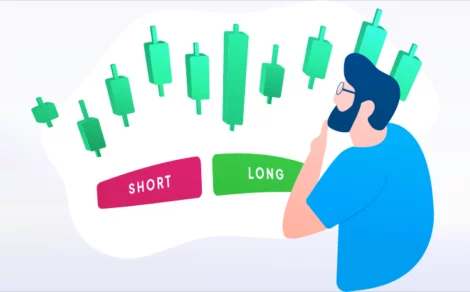
Choosing stocks for long-term investment provides benefits like higher returns and tax deductions. However, there are a lot of short-term trading strategies in the stock market that let you capitalise on the existing market trends without having to wait for a long time. One such trading strategy is momentum trading.
Momentum traders particularly choose stocks that can allow them to maximise their return by using the growth of a specific group of stocks. This blog helps you understand the basics of momentum trading, including how it works, its benefits, and more. Start your momentum trading journey with the help of this blog.
What is Momentum Trading?
The definition of momentum trading states that it is a strategy based on an asset’s recent price movements in the market. This strategy can be implemented based on the idea that stock prices move upwards and downwards due to market fluctuations. Traders buy a stock before its price goes upward and sell before it goes downward. Momentum traders apply short-selling of shares when they predict that a stock’s price will fall down.
Momentum trading strategies are based on the current conditions of supply and demand in the market. This strategy can be used by prioritising technical analysis. Individuals frequently compare it with trends in more traditional investment markets such as currencies and commodities.
Momentum traders measure the trend in a particular direction, whether it is upward or downward and trade accordingly. They focus on trading with the trend rather than catching the peaks and bottoms of a trend.
Process of Momentum Trading
Individuals using the momentum trading strategy enter a short or long position whenever the stock price begins to move (up or down) and exit before the trend changes. While using this strategy, traders consider that stock prices do not reflect their real value for a long period. Instead, they tend to move in one direction for a longer duration.
By taking positions in advance, momentum traders try to capitalise on the continuation of an upcoming trend and maximise their chances of profits. The success of a momentum trading strategy depends on speed, as traders capitalise on quick price changes to generate profits. It also depends on accurate predictions of market trends backed by volume.
Momentum traders use technical indicators such as moving averages or the Relative Strength Index (RSI) to analyse the strength of the movement of stocks. Whenever they identify a trend, traders enter the market and hold the position until it goes in the opposite direction. If the price of a stock trades above the moving average or beats the resistance levels, it provides a confirmation to the trader that the current trend will continue.
When the price goes below the moving average or beats through support levels, traders get a selling signal that they can follow up on. When traders receive this information, they open new orders and change the existing ones to benefit from anticipated profits.
Common Momentum Trading Strategies
There are primarily two approaches to momentum trading. These two approaches are short-term momentum and long-term momentum. Here’s how they work:
- Short-Term Approach: A short-term momentum trader capitalises on short-term trends. This can be a few minutes, a few hours, and days. This short-term momentum trading approach can be applicable in the market environment by using various time frame charts. Individuals considering this approach are mostly day traders who close all of their positions at the end of the trading day to avoid overnight risks.
- Long-Term Approach: The long-term momentum approach allows traders to use daily, weekly, and monthly charts to identify uptrends and downtrends over longer periods in the market. The best advantage of using a long-term approach is that its extended timeframe mitigates the effects of short-term volatility.
There are some different strategies in this trading that allow individuals to capitalise on continued price movements. Below are the different strategies that you can use at the time of momentum trading:
- Trend-Following Strategy: A trend-following strategy is commonly used by momentum traders to enter the trade that aligns with the current market direction. Traders look for signs of upward or downward trends and enter the position accordingly. This strategy is highly popular as it earns profits with price movements.
- Moving Average Crossovers: The strategy of moving average crossovers involves utilising both short-term and long-term moving averages. This allows traders to determine potential entry and exit points. A short-term moving average surpassing a long-term one denotes a buying opportunity for traders. Similarly, a long-term average crossing the short-term one gives selling signals. Traders can confirm the momentum in the stock market with the help of this strategy.
- Breakout Strategy: The breakout strategy is used by traders to identify a stock’s price when it breaks through a level of support. The start of a new trend can be recognised by a breakout. By the time of the breakout, momentum traders enter new positions to capitalise on the upcoming reversal. Traders use this strategy to benefit from large price swings, which is effective in volatile markets.
- Relative-Strength Strategy: The relative-strength strategy of momentum trading involves comparing the performance of a particular asset against its market peers and an index. Momentum traders using this strategy often look for assets that have greater relative strength. This indicates these stocks may outperform other assets and continue their uptrend. A relative-strength strategy allows momentum traders to prioritise assets that have the highest potential for sustained momentum.
Benefits of Momentum Trading
Momentum trading offers a lot of benefits for traders when they focus on short-term investments in stocks. These are some of the benefits of momentum trading that you can get:
- Momentum trading can provide you with high profits in a short period by capitalising on market volatility. Traders buy stocks that show an upward trend and sell them when they anticipate their decline to make quick profits.
- This trading strategy leverages the volatility of the market as well as the emotional decisions of other traders. Through specific buying and selling points, momentum investors avoid emotional responses and earn profit from the market’s fluctuations naturally.
- With the proper execution of this trading strategy, you can get significant returns, which makes it an attractive strategy for traders who take risks.
- You can use the momentum trading strategy not only for stock trading but also for other securities like forex and commodities. This makes it a versatile trading strategy while making short-term investments.
Limitations of Momentum Trading
There are a lot of limitations you can find in momentum trading, which you must be careful about. Below is the list of limitations that are included in momentum trading.
- The strategy of momentum trading carries significant risks, like mistiming trades. You can face substantial losses as a result of these risks.
- You can face high stock turnover costs while using the momentum trading strategy. Frequent trading can lead to expensive fees, especially if you are a beginner.
- Momentum trading may take a lot of time. It requires continuous monitoring of the market, which allows you to make quick decisions.
- The momentum trading strategy is market-sensitive. While it performs well in a bull market, investors’ confidence may go down sharply in bear markets, reducing your profit margins.
How to Start Momentum Trading?
Since you understand momentum trading meaning and its overall purpose, here are steps you must follow to start this strategy:
Step 1: First of all, you must identify stocks that are showing strong momentum. You can identify trends using technical indicators like RSI or moving averages. You must look for high-momentum shares to engage in momentum trading.
Step 2: Analysing the market conditions is a necessary step to confirm if the momentum is likely to continue, which consists of volume checks and price movements.
Step 3: Now, you may enter a trade after a clear trend has been established. Make sure you have set up a stop-loss order to protect your investment against reversals.
Step 4: Track your trade very closely by paying attention to the technical signals that can indicate the end of momentum.
Step 5: Exit from the trade when you see the signs of fading from the indicators or when you have achieved a predefined profit target.
You must place a buy order slightly above the current price if you see an upward trend. Your sell order will be affixed at a certain level above the current price. This will allow you to exit the position with profit.
Final Thoughts
Traders use momentum trading by entering a stock position whenever the price starts rising and exiting when it goes down. This trading strategy allows traders to leverage the market volatility and allows you to invest in other securities like forex and commodities.
You can open a demat account with Torus Digital without paying any account opening fee. You will get benefits like zero annual maintenance charges after opening a demat account with Torus Digital.