To start investing in the Indian financial markets, you must open a Demat account, which serves as an electronic account for storing your securities. You have to choose the appropriate type of Demat account to make any investments.
If you are a Non-resident Indian (NRI), you get the option to choose between repatriable and non-repatriable Demat accounts. A repatriable Demat account allows NRIs to invest in Indian markets and transfer funds abroad.
In this blog, you will learn about a repatriable Demat account, how it works, benefits and more. So, let’s get started.
Snapshot Definition: Repatriable Demat Account
| Term | Repatriable Demat Account |
| Meaning | A Demat account for NRIs that enables investment in Indian securities with the ability to transfer funds abroad |
| Linked Bank Account | NRE (Non-Resident External) account |
| Key Benefit | Both principal and investment returns can be repatriated, subject to regulations |
Definition of Repatriable Demat Account
A repatriable Demat account meaning is a special type of Demat account designed for Non-Resident Indians (NRIs) who live outside of India but wish to trade or invest in Indian securities. It allows investors to transfer their income made in India to a foreign country where they are currently residing.
To be classified as an NRI, you must meet the criteria set by the FEMA and the Income Tax Act. This type of Demat account (repatriable) allows NRIs to transfer funds both to and from foreign countries.
How do Repatriable Demat Accounts Function?
This is how a repatriable Demat account works:
Account Setup:
- To open a repatriable Demat account, you must fulfil the requirements set by the Reserve Bank of India (RBI) and the Securities and Exchange Board of India (SEBI). You have to provide the necessary documents and meet the regulatory guidelines.
Linking with NRE Account:
- You must link your Demat account with a Non-Resident External (NRE) bank account. This is important because it allows you to transfer funds from their foreign bank account to India and repatriate (send) the funds back abroad without any restrictions.
Repatriation of Funds:
- The main feature of a repatriable Demat account is that it allows you to repatriate your funds abroad up to a limit of $1 million/year. The money you earn from trading or investing in Indian securities can be transferred to your NRE account and sent back to your country of residence.
Repatriable vs Non-Repatriable Demat Account: Quick Comparison
| Feature | Repatriable Demat Account | Non-Repatriable Demat Account |
| Linked Bank Account | NRE account | NRO account |
| Repatriation | Allowed for principal & returns (within RBI limits) | Not freely allowed |
| Best For | NRIs investing funds earned abroad | NRIs investing income earned within India |
| Usage | IPOs, equity, and mutual funds with repatriable proceeds | Holdings where proceeds must stay in India |
Advantages of a Repatriable Demat Account
These are some of the advantages of a Repatriable Demat account you should know:
- If you are an NRI, you can utilise a repatriable Demat account if you are seeking to invest your money in IPOs or financial assets on a repatriable basis.
- The NRI repatriable Demat account allows NRI investors to transfer returns on investment and earnings from selling securities to their resident country.
- This Demat account allows you to repatriate up to USD 1 million in every calendar year.
When Should an NRI Choose a Repatriable Demat Account?
You should use a repatriable Demat account when:
- Your investment funds originate from abroad and are parked in your NRE account
- You want full flexibility to repatriate capital gains and investment proceeds to your resident country
- You plan to invest in products such as IPOs and equity assets that allow repatriable transactions
- You prefer keeping foreign income and Indian investments clearly separated per FEMA rules
What to Watch Out For Before Opening a Repatriable Demat Account
- All investments must be routed only through the linked NRE account
- Funds earned in India (salary, rent, business income) cannot be invested via this account
- Separate Demat accounts must be maintained for repatriable and non-repatriable holdings
- Capital gains taxation applies even though repatriation is permitted
- Repatriation limits apply
How can You Open a Repatriable Demat Account?
These are the steps to open a Repatriable Demat account in India:
1. Select a Depository Participant (DP)
First, you have to select a depository participant or stockbroker who offers repatriable Demat account openings for NRIs.
2. Collect Necessary Documents
Here are some of the important documents you may have to produce to complete the account opening process.
- Photographs
- Passport
- Visa
- Address Proof
- Bank Account Proof
- PIS Approval Letter
3. Complete the Account Opening Application Form
Complete the account opening process by filling out all the relevant details. To avoid rejection, you have to ensure that all the details entered are correct.
4. Submit the Necessary Documents
Finally, complete the form by submitting the required documents. Depending on your selected platform, you can submit the document either online or offline.
5. In-Person Verification (IPV)
If you are an NRI and residing outside India, you must get your documents attested by an Indian notary, embassy or consulate. Otherwise, if you are in India, you have to complete the in-person verification through a representative or branch office.
6. Account Activation
Once your documents are verified and processed, you will receive your Demat account details, including your unique Beneficial Owner (BO) ID number.
Taxes & Rules for Repatriable Demat Accounts
As an NRI, here are the taxes applicable to your profits and dividends you get by investing in the Indian stock market:
1. Taxes Applicable
These are the applicable taxes for NRI investors using a Repatriable Demat account:
- Income from Dividends on Shares: Income from dividends and NRO accounts for NRIs is taxed at the applicable peak tax rate. For bank deposits, NRIs can avail a Section 80TTA benefit of up to ₹10,000 per year on NRO accounts. On the other hand, interest earned from NRE and FCNR accounts is tax-free, so no income tax is applicable. Interest on NRO accounts, while fully taxable, is eligible for the Section 80TTA deduction.
- Capital Gains: NRIs are taxed on capital gains from assets located in India, including Indian companies and property. When selling a house property, the buyer must deduct 20% TDS and remit it to the government. NRIs can also claim capital gains tax exemptions under Sections 54 and 54EC, which apply to reinvestment of gains. If investment income (taxed at 20%) is the only source of income in India, NRIs are exempt from filing income tax returns.
2. RBI Guidelines for Repatriable Demat Accounts
Below are some of the RBI guidelines that NRIs must adhere to:
- To open a repatriable Demat account, NRIs must link it to an NRE bank account, enabling them to transfer funds from investments back to their foreign accounts.
- This account allows the repatriation of earnings from securities sales, including dividends, interest, and capital gains.
- Compliance with the Foreign Exchange Management Act (FEMA) is necessary.
- Additionally, NRIs must maintain separate Demat accounts for repatriable and non-repatriable investments as per RBI guidelines.
Summing Up
To trade in the Indian stock markets, investors must have a Demat account. Different types of Demat accounts serve various investor needs. Indian citizens can open either regular or BSDA Demat accounts, while NRIs can opt for either repatriable or non-repatriable Demat accounts.
If you are using a repatriable Demat account, you can transfer funds abroad after trading in Indian securities. Additionally, you have the option to transfer funds from your NRO account to your NRE account after paying the applicable taxes.
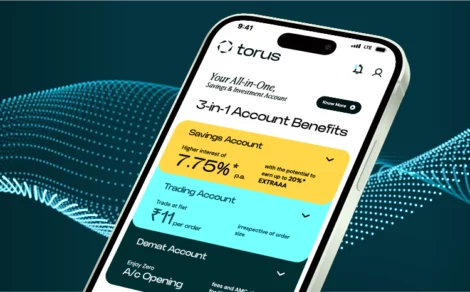
Open your lifetime AMC free Demat account with Torus Digital and do maximum savings. Open your account with us for free!